Stages of Sleep: NREM & REM Sleep Cycle
Alicia Roth, PhD, DBSM
Alicia Roth, PhD, DBSM is a Clinical Health Psychologist & Staff at the Cleveland Clinic, where she specializes in Behavioral Sleep Medicine. She completed her doctoral training at the University of Florida, Internship at the Baltimore VA, and Behavioral Sleep Medicine Fellowship at The Cleveland Clinic. Her work focuses on treating a range of sleep disorders, […]

- There are four main stages of sleep that we cycle through during the night – Stage 1, Stage 2, Stage 3, and REM sleep. Each stage serves important functions, like muscle relaxation, memory consolidation, and brain restoration.
- We typically go through 4-5 full sleep cycles per night, spending about 50% of the time in light stages 1 and 2, 25% in deep Stage 3 sleep, and 25% in REM sleep. The first REM period is short but lengthens throughout the night.
- Sleep cycles change over our lifespan – newborns have less defined cycles that develop over the first year into the adult stages. Hormonal shifts in adolescence make it harder to fall asleep early. As we age, sleep tends to shift earlier again and decrease slightly in duration.
When you hear about getting a good night’s rest, you often hear about the sleep stages that come with it— Stage 1, Stage 2, Stage 3, and REM Sleep Stage. We all know getting a good night’s rest is vital, but many are left wondering what these stages are and how they impact the quality of our sleep.
Not only is sleep essential for your health and wellness, but it’s something most people look forward to after a long, tiring day. A lack of quality sleep can lead to a slew of issues, from experiencing irritability to weight gain. On the other hand, consistently getting a good night’s sleep can be linked to lower body fat and improved heart health. Educating yourself on how to get the best night’s sleep and implementing better sleep habits are the first steps in combating fatigue and sleep deprivation.
The Cycle of Sleep Stages
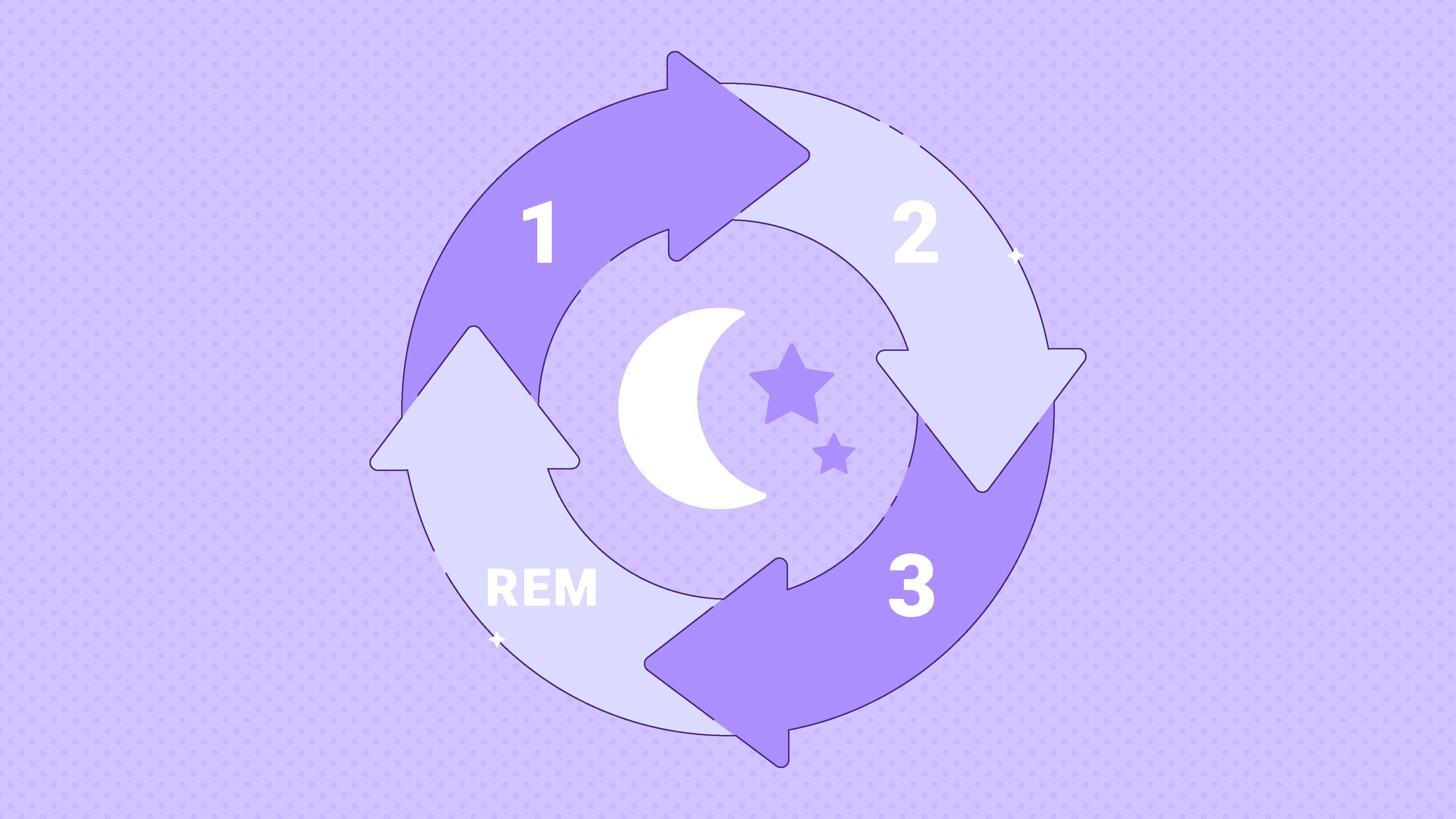
While we sleep, our bodies progress through four different stages: 1, 2, 3, and REM. In a typical night, we will cycle through these stages 4 or 5 times, and it usually takes 90-110 minutes to complete a full sleep cycle.
When we first fall asleep, we start at Stage 1, and progress to Stage 2 & 3, and then drop back to Stage 2 briefly before starting our first REM stage of sleep. After the first stage of REM sleep, your body returns to Stage 2. The first REM stage is usually quite quick, while every REM stage after that increases in duration and can last up to an hour.
After the first sleep cycle completes, your body progresses through Stages 1, 2, 3, and REM throughout the night with the time in each stage varying throughout the night. According to Dr. Alicia Roth, a specialist in behavioral sleep medicine, “It is also common to have a brief awakening (that’s shorter than five minutes) after a sleep cycle.”
Stage 1
Stage 1 is the lightest stage of sleep and includes the time you’re transitioning from wakeful and alert to groggy and sleepy.
During this brief stage, your muscles begin to relax, and you begin to drift off to sleep; this stage is accompanied by slow eye movements and slow theta brain waves. Because you’re drifting off to sleep and still somewhat alert during this stage, you can easily wake yourself up. Additionally, this stage is associated with hypnic jerks and the sensation of falling. Dr. Roth adds, “A phenomenon called hypnagogic hallucinations can also occur during the transition between awake and stage 1.”
Stage 2
Stage 2 is when you are no longer alert and aware of your surroundings and deeper sleep begins. At this point in the night, your body temperature starts to drop and your breathing slows.
Your brain activity during this stage is characterized by K Complex sleep structures intermixed with bursts of sleep spindles. Sleep spindles are quick, rapid bursts of brain activity, whereas K Complexes are longer waves created in response to an outside stimulus such as sounds. K Complex structures prevent you from waking up to small stimuli throughout the night and aid in sleep-based memory consolidation.
The average individual spends about 50% of their time sleeping in Stages 1 & 2.
Stage 3
Stage 3 is where deep sleep begins and where individuals spend about 25% of their night; in fact, you receive your deepest non-REM sleep in Stage 3. During this time, your muscles relax, your blood pressure and breathing rate drop, and it is difficult to wake up. Your brain activity is characterized by slow delta waves, and some even refer to Stage 3 of sleep as Delta sleep. Parasomnias, such as sleepwalking, sleep talking, night terrors, and bedwetting, commonly occur during this stage of the night.
Your most physically restorative sleep occurs during Stage 3. Long periods of Stage 3 sleep combat the effects of sleep deprivation. During this stage, human growth hormone is released and refreshes your body to take on the next day; this includes immune system restoration, memory consolidation, brain cleanup, and updating your brain for a new day of learning.
REM Sleep
REM sleep, or Rapid Eye Movement sleep, is characterized by quick side to side eye movements, increased brain activity, and an increased respiration rate. People also spend 25% of their sleep in the REM stage. Waking up during this stage can cause sleep inertia, or the prolonged feeling of grogginess right after awakening.
During REM sleep, our most vivid dreams occur. This is also a time when we experience brain restoration. Paralysis in REM protects us from our dreams and active mind during this time too. Your brain stem sends signals to your body to relax, putting your muscles in a temporary state of paralysis; but at the same time, your thalamus and amygdala are sending images, sounds, and other sensations perceived during the day to our cortex to fill our dreams. Many people refer to REM sleep as paradoxical sleep because your brain is active, while your body is frozen. When you wake somebody up during REM sleep, they have a higher chance of remembering the content of their dreams.
Dr. Roth also likes to say that “REM sleep is your brain cleaning up a messy work desk. You’re organizing files, shredding papers, putting the pens in the pen cup. Deciding what needs to be in front of you and what can go in the trash.”
How Age Impacts Sleep Cycles
While you grow, your body develops and undergoes many changes, and your sleep cycle is no exception. As a newborn, you do not have distinct sleep waves, but by the time you’re just a few months old, you start to develop a standard sleep cycle.
Newborn sleep “cycles” are labeled as “Active,” “Quiet,” and “Indeterminate.” “Active” sleep is equivalent to REM sleep, “Quiet” sleep is equivalent to NREM sleep, and “Indeterminate” sleep is not distinguishable between “Active” or “Quiet.” For the most part, babies are in “Active” sleep and frequently awaken, resulting in restless nights for new parents. Once babies reach about four months old, they begin to develop distinct sleep stages and can sleep up to 13 hours a night, with 2 or 3 naps in between.
By the time you reach your first birthday, your sleep stages should be fully developed. From age 1 and continuing throughout adolescence, children should receive 9-10 hours of sleep per night with a nap somewhere in between. During this time, your body is maturing, and restorative sleep ensures your body can function and develop properly. It’s important for parents to help their children start developing healthy sleeping habits while practicing a normal bedtime routine.
After adolescence, physiological changes in your circadian rhythm create a shift in your sleep cycle; this causes you to fall asleep later and sleep in later. This shift accounts for why students are some of the most sleep deprived individuals and the continued discussion among school boards to push start times back.
As you age, the shift in your circadian rhythm shifts back, prompting you to go to bed earlier and wake up earlier; this explains why most older adults tend to grow tired in the evenings and wake up around sunrise. Additionally, the time spent sleeping tends to decrease as you age, with most adults only receiving 6.5 to 8 hours of sleep per night.
Overview of The NREM & REM Sleep Cycle
Everybody knows how important sleep is to live a healthy and happy life; we hope our guide has helped distinguish between the stages of sleep, and why they’re each important to getting a quality night’s sleep.