How Does Caffeine Affect Your Sleep
Michele Roberge, RPSGT, R.T.
Michele Roberge is a Registered Polysomnographic Technologist and a Registered Radiologic Technologist. She also serves on the board for the Florida Association of Sleep Technologists (FAST).

Approximately 85% of Americans consume caffeine every single day; so in this guide, we’ve decided to discuss how caffeine can impact your night’s sleep. When consumed moderately, caffeine can offer a boost of energy and increase alertness. On the other hand, this substance can have plenty of unpleasant side effects, especially when consumed in large quantities. Typically, people use caffeine to help them stay awake and upbeat when they haven’t gotten enough sleep. However, the relationship between caffeine and sleep is complicated, and the long-term effects of caffeine on sleep can be unhealthy.
What is Caffeine?
Caffeine is a naturally occurring substance found in over 60 different plants and is most commonly associated with the coffee bean and tea leaf. Though found in specific plants, caffeine is now produced synthetically, as well, and is in a variety of products of energy drinks, sodas, and even chocolate chip cookies.
A stimulant, caffeine impacts your nervous, digestive, circulatory, and excretory systems. In the short term, it increases your blood pressure and heart rate; but how exactly does it make you feel more alert? When you consume caffeine, it enters your bloodstream through your stomach. Once in your system, caffeine blocks adenosine receptors, raises dopamine levels, and inhibits the production of melatonin.
Dopamine helps you feel more alert, while adenosine and melatonin do similar things in your body. Adenosine is a neurochemical that is produced and secreted throughout the day. As adenosine levels build up, you feel tired and not as alert. The hormone melatonin regulates your sleep-wake cycle. In the mornings, melatonin levels are at their lowest, so you feel energized to take on the day. When the evening rolls around, and the sun sets, your body produces melatonin, which readies you for sleep by helping you wind down and relax.
Most everybody consumes caffeine in some way, shape, or form throughout their day, and in moderation, this stimulant can improve your mood, mental performance, and reaction times. The average daily dose of caffeine per person is around 300 mg, and the FDA recommends keeping your dosage below 400 mg on a single day. Unfortunately, at high doses, caffeine can have various adverse side effects including sweating, nausea, headaches, increased heart rate, increased breathing rate, muscle tremors, and trouble sleeping.
Another big downfall to consuming caffeine is the “crash” that usually follows. After you drink a caffeinated beverage, it takes about 30-60 minutes for the caffeine to hit peak levels in your bloodstream. During this time, you should feel most alert; but, as caffeine leaves your body, you’ll start to feel increasingly sleepy. For this reason, people usually have multiple caffeinated beverages throughout the day. In fact, the average adult drinks three cups of coffee or tea every day.
If you’re somebody who regularly consumes caffeine, it’s important to note how caffeine levels in drinks can be unpredictable. In coffees and teas, the caffeine content can vary depending on how the drink is prepared. The type of coffee bean or tea leaf, as well as the amount, can significantly dictate how much caffeine a drink has.
Brewing time can play a crucial role, too. Though the FDA requires food and drink brands to disclose whether or not there is caffeine in a product, they do not require these brands to specify how much. When drinking soda or energy drinks, check the label to see the caffeine content.
Brewing your own coffee and tea, and avoiding energy drinks and sodas can help you keep better track of how much caffeine you’re consuming every day, and prevent you from drinking more than you intend.
To help you keep track of your daily caffeine intake, we included a table with common caffeinated beverages and how much caffeine they contain.
| Product | Serving Size | Caffeine Content |
|---|---|---|
| Brewed Coffee | 8 oz | 95 mg |
| Decaf Coffee | 8 oz | 2 mg |
| Espresso | 1 oz | 64 mg |
| Brewed Tea | 8 oz | 47 mg |
| Red Bull | 12 oz | 111 mg |
| Pepsi | 12 oz | 37.5 mg |
| Coca-Cola | 12 oz | 34.5 mg |
| Mountain Dew | 12 oz | 53 mg |
| Hot Cocoa | 1 packet, 6 oz water | 4 mg |
| Chocolate Bar | 1 bar | 9 mg |
Caffeine and Sleep
A recent sleep hygiene study examined how consuming caffeine during the day can impact your quality of sleep at night. During this study, they had participants drink caffeinated beverages right before bed, 3 hours before bed, and 6 hours before bed. The experiment also included a control group, who drank a placebo drink at the same intervals before bedtime.
Researchers then studied participants’ sleep disturbances using a portable sleep monitor. They found every participant who consumed a caffeinated beverage before bed, at all intervals, had disrupted sleep, and only the control group reported sleeping soundly. With the results of this study, we can conclude that drinking caffeine even as early as six hours before bed can negatively impact your night’s sleep.
Drinking caffeine every day can negatively impact your life when you’re both sleeping, and awake. In recent years, many researchers have questioned whether or not caffeine is addictive, and multiple studies have found regular consumption can quickly lead to physical dependence.
People who drink caffeine every day and quit cold turkey usually show signs of withdrawal including headaches, muscle pains, and fatigue. Caffeine addiction can also lead to sleep deprivation and disorders such as insomnia. Plus, the more you drink caffeine, the less effective it is, because you build up a tolerance to it. Meaning, habitual caffeine drinkers usually need multiple cups of coffee or tea to feel the effects of the substance.
Regular caffeine consumption can delay your sleep-wake cycle, causing you to fall asleep later and get less sleep overall. Your sleep-wake cycle, or your body’s circadian rhythm, controls when you fall asleep and when you wake up— pretty self-explanatory.
Your circadian rhythm is controlled by melatonin, which is influenced by the presence of sunlight. Drinking caffeine in the hours before bedtime can suppress melatonin production, which readies your mind and body to go to sleep. If melatonin production is inhibited, it’s harder to fall asleep and stay asleep. On average, those who consume caffeine daily fall asleep an hour later and don’t spend as much time in restorative stages of sleep as those who do not have caffeine in their system at bedtime.
On a related note, Michele Roberge RT(R), CCSH says, “There are so many patients who claim that they can sleep well immediately after consuming a highly caffeinated beverage. These patients have likely become so acclimated to poor sleep that they are unable to determine that the caffeine is adversely affecting their sleep. With caffeine blocking the production of melatonin, the patient will experience more frequent arousals and although the patient may be unaware of these arousals, they will prevent the patient from entering deep, restorative sleep.”
If you absolutely must drink a caffeinated beverage to get through your day-to-day, do so every other day, in the morning, and try to eliminate caffeine after 12 pm. Also, try drinking herbal teas over sodas or energy drinks— though they may not have as much caffeine, they’re free from the unhealthy chemicals and additives usually found in those beverages.
Below, we’ll talk about how you can eliminate caffeine from your life, and feel energized every day by merely getting healthy sleep.
Eliminate Caffeine With Healthy Sleep
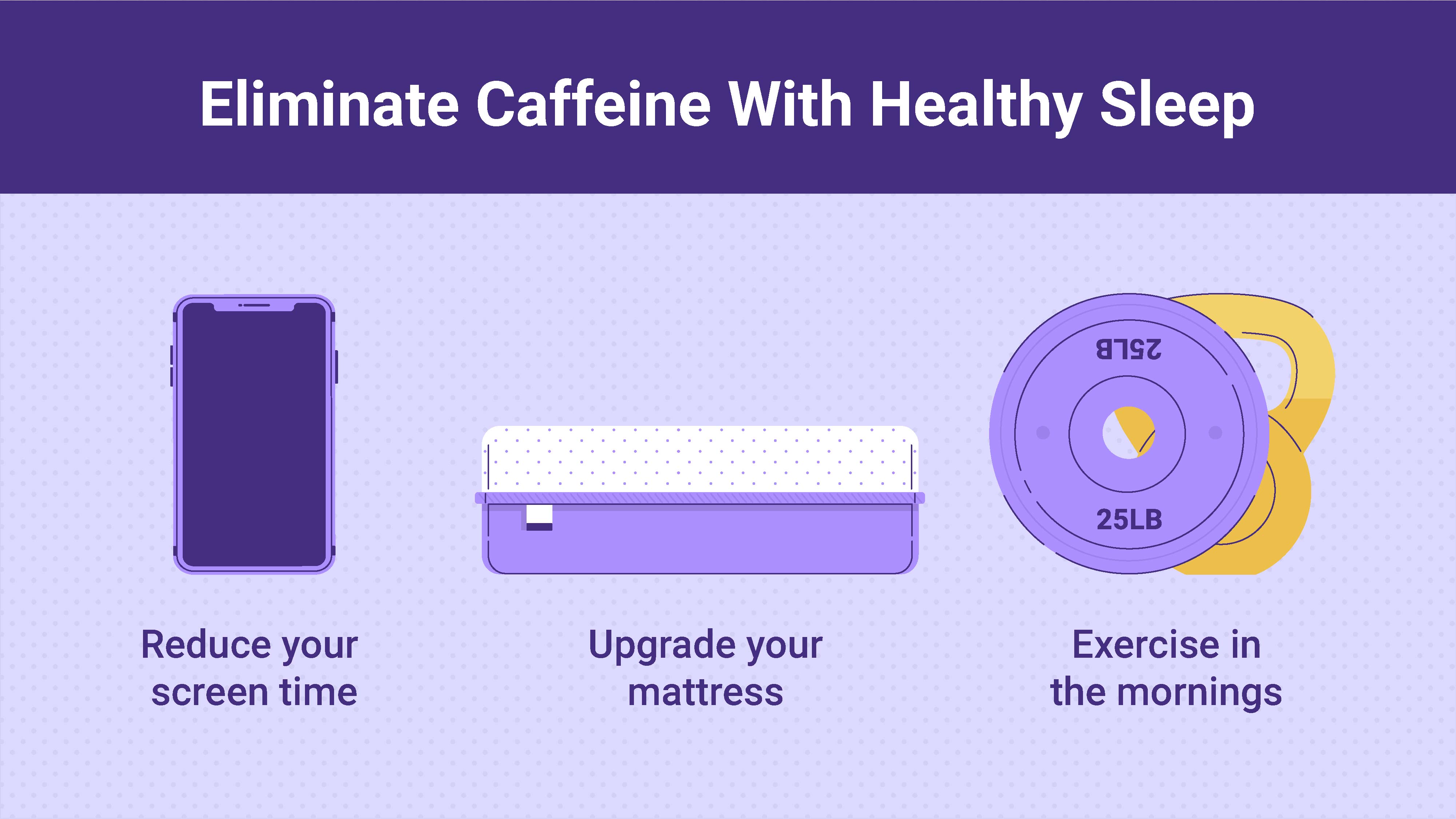
If you find you’re tired day after day, it is probably a sign you’re not getting enough sleep at night. A recent study done by Gallup found the average American sleeps only 6.8 hours at night, less than the recommended 7-9 hours for adults. Practicing good sleep hygiene habits and going to bed at the same time every day can help you get more restful sleep, so you feel refreshed in the mornings. If you’re having trouble getting the sleep you need, follow these tips:
- Reduce screen time. The blue light phones and televisions emit can delay the production of melatonin and prevent you from falling asleep.
- Eat the best foods for sleep in the evenings. If you’re used to swinging through the drive-thru for dinner, it could be the reason for your sleepless nights. Ditch the greasy cheeseburgers and try incorporating fish, whole grains, and milk into your dinner. If you’re hungry for a midnight snack, try a handful of almonds or chamomile tea.
- Catch some morning sun. As we mentioned before, sunlight influences melatonin production. When your body senses sunlight, it knows it’s time to wake up, and then it senses a lack of sunlight, it realizes it’s time for bed. Getting sunlight first thing in the morning helps reinforce your sleep-wake cycle and tells your body to wake up. Natural light is also great for boosting moods and energy levels, as sunlight itself is a mental stimulant, too.
- Exercise in the mornings. A morning run can lower your blood pressure, help you fall asleep sooner, and induce longer sleep cycles at night. Additionally, getting your heart rate up early in the morning is a great way to wake your body and ready it for the day ahead. Exerting energy first thing in the mornings may seem counter-intuitive when you’re already tired, but can boost your mood and energy levels during the day.
- Upgrade your mattress. If you struggle to relax on your mattress or wake up in the mornings with aches and pains, it’s probably time to upgrade to one of the most comfortable mattresses. Read online mattress reviews and guides to help you find the best mattress for your sleep style and needs. When searching, keep in mind how you sleep, the pains you wake up with in the morning, and your preference for firmness to find a suitable bed.
Can You Cut Out Caffeine?
We hope this guide has helped you learn more about how caffeine impacts your body. Next time you reach for a cup of joe, take a moment to weigh the pros and cons. If you’re somebody who needs a caffeine boost during the day, try substituting it with a walk outside in the sun. If you have to have coffee, consider a brief coffee nap for a little extra boost.
When it comes to consuming caffeine, avoid unhealthy energy drinks and stick to teas and coffee. When all else fails, try improving your sleep by finding the most comfortable mattress for you.